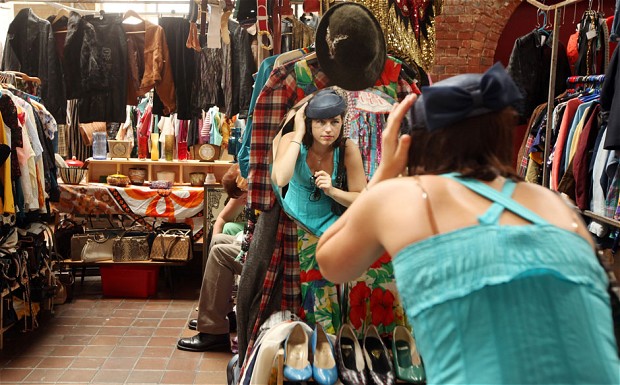
 There’s something compelling about a person in vintage clothing that goes far beyond the mere fashion statement. It’s a sense of distinctiveness and daring — stylish, but above the fickle whims of fashion.
Most people (like myself) find their way to vintage apparel out of a growing aversion to modern “cookie-cutter” mall clothes, or perhaps what’s all the rage this season just doesn’t flatter your body type so well. For those looking to give their wardrobe a boost of versatility and individuality, vintage apparel is the ultimate remedy.
Another notable reason to shop vintage is for the clothes’ superior quality and value, usually constructed in styles or fabrics no longer available, but still highly wearable or collectible. The average vintage item from 50 years ago is amazingly well-made compared to its modern equivalent. Beautiful, first-class styling and workmanship — especially for suits and evening wear — are quickly becoming a lost art. A custom-tailored suit can now run thousands of dollars, but a fine vintage suit can be had for a small fraction of the cost.
Vintage goes mainstream
A mere 25 years ago, vintage was still commonly viewed as the low-budget, funky uniform of the starving artist. But since around 1985, the popularity of vintage has grown exponentially as individual taste and comfort have become more important to the consumer than the latest fashion fad or trend.
Hollywood is no exception. Celebrities regularly wear vintage evening dresses on the red carpet and more and more contemporary designers are looking to decades past for inspiration. The savviest designers know that everything good in fashion always comes around again anyway; in fact, the most flattering styles from each period never really go away at all.
Shopping for vintage
I recommend starting out at a vintage-clothes shop, where you can try on a myriad of fashions across several decades to determine the best fit for your body. Once you’ve trained your eye to recognize your era of choice, then you’re ready to brave secondhand shops, flea markets, antique malls, thrift stores, estate sales or the vast number of online retailers to unearth your own vintage gems.
So what should you be looking for? I consulted some of the Web’s best vintage retailers — Don and Michelle Myers (rustyzipper.com), April Ainsworth (vintagevixen.com) and Carol Baker (dandelionvintage.com) — to give us a decade-by-decade scoop on what’s hot (and what’s not) in vintage apparel.
1950s
For him: rayon Hawaiian shirts; gabardine zip and leisure jackets; unusual mid- century print sport shirts; denim, jackets and workwear (’50s or earlier) by Levi’s, Lee and Wrangler; and dress hats, especially high-quality felts and Panama or porkpie-style.
For her: cocktail and sun dresses; “wiggle” and bombshell halter dresses; full and flared skirts in crisp silks and taffetas; haute-quality business wear; peasant blouses and sequined Mexican fiesta skirts for the “Lolita” look; cashmere and beaded sweaters; svelte millinery or vintage gloves; classic, tailored peplum jackets by Lilli Ann and Irene; narrow pencil skirts; and structured leather handbags, especially reptile or alligator.
Avoid: poodle skirts, neck scarves, saddle shoes.
Hot ’50s labels: Dior, Worth, Chanel, Lilli Ann, Schiaparelli, Balenciaga, Givenchy.
1960s
For him: leather bomber and motorcycle jackets (think Marlon Brando in The Wild Ones); Nehru, mohair or Rat Pack sharkskin suits; tailored, embroidered cowboy shirts, especially N. Turk, Nudie and Manuel; vintage Western boots and hats.
For her: chic chemise, shift or sheath dresses (particularly for that perfect “little black dress”) in natural-looking synthetics; pedal pushers or cropped pants; lingerie, especially “Pucci for Formfit Rogers” slips and nighties; mod mini and A-line dresses; mid-calf to knee-high boots; animal print hats and coats; Jackie O-style boxy suits; cutting-edge separates or dresses from Quants Bazaar, Jax, Birdcage, Biba; scarves and accessories by Pucci or Peter Max in Art Nouveau and Art Deco patterns and prints; suede jackets.
Avoid: ponchos, overly jarring color combos (like orange/kelly green or hot pink/royal blue) and oddly cut Empire-waist evening wear.
Hot ’60s labels: Pucci, Givenchy, Rudi Gernreich, Mary Quant, Courreges, Cardin, Dior, Yves Saint Laurent.
1970s
For him: T-shirts with old brand or business logos; trucker hats; disco shirts, especially engineered or photo prints.
For her: jersey-knit wrap dresses; “bohemian” gauze and muslin tops; edgy punk-inspired clothing trimmed with slits, safety pins, chains and zippers; strappy evening or platform shoes; embroidered ethnic wear; well-made leather jackets and coats; knit casual shirts; corduroy pants; hippie handbags; and casual pantsuits (think the original Charlie’s Angels).
Avoid: obvious polyesters or caftans (unless you’re going to a costume party!). Make sure you notice the cut of ’70s pants as you shop and buy according to your shape — they run from a high natural waist to low-slung hip huggers.
Hot ’70s labels: Yves Saint Laurent, Diane Von Furstenberg, Halston, Fiorucci, Famolare, Bill Blass, Bob Mackie.
1980s
For him: embroidered rayon bowling shirts; team uniforms and jerseys; Izod alligator polo shirts by Lacoste.
For her: fluid jersey cocktail dresses; textured knits and weaves in casual tops and sweaters (especially handwoven or handknitted); Louis Vuitton, Chanel and Gucci handbags and accessories.
Avoid: shoulder pads, legwarmers, acid-washed jeans, oversized (to the knee) and large-patterned sweaters.
Hot ’80s labels: Oscar De La Renta, Galanos, Lacoste, Ralph Lauren, Calvin Klein, Armani, Ferragamo, Chanel, North Beach Leather, (early) Betsey Johnson.
1990s
For him: skateboard clothing, Doc Martens and Dickies workwear.
For her: Designer accessories, sheer burnout velvet or chiffon tops.
Avoid: pashmina stoles, fleece.
Hot ’90s labels: Calvin Klein, Donna Karan/DKNY, Gaultier, Todd Oldham, Chanel, Versace, Vivienne Westwood.
Tiffany Owens is a Portland, Ore.-based freelance writer and obsessive collector of vintage coats, boots and purses.
This article originally appeared on Wine@MSN.com | August 2005

 Tiffany Owens